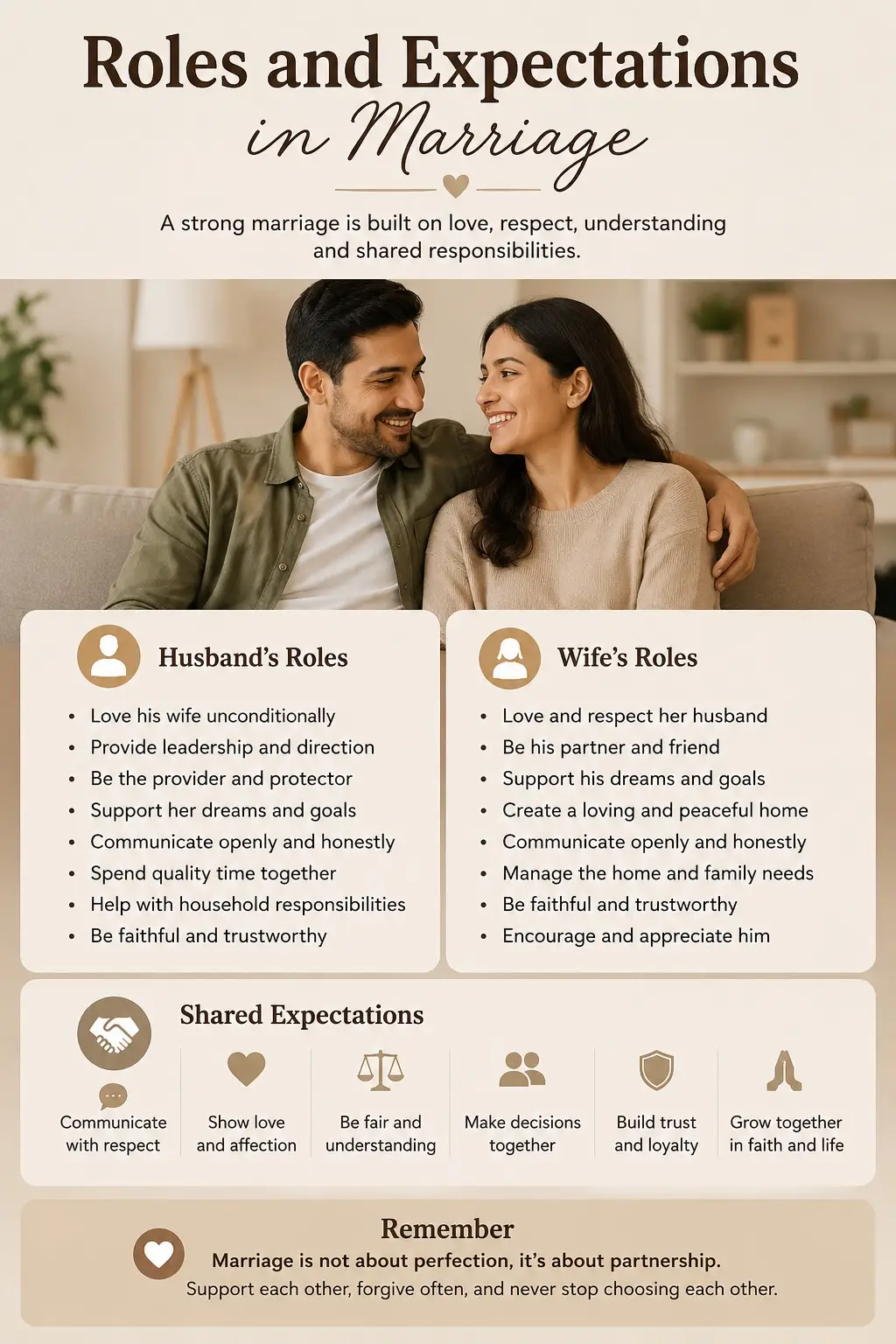
Many marriage conflicts are not actually about dishes, finances, parenting, or schedules. They are about expectations. Every bride and groom enters marriage carrying a set of assumptions about what marriage should look like, how a spouse should behave, and what roles each person should fulfill. Often, these expectations are deeply rooted long before a couple ever says, “I do.” The challenge is that many expectations remain unspoken. One spouse may expect emotional connection to come naturally. Another may assume spiritual leadership should look a certain way. One may think that household responsibilities will be shared while the other may not. When expectations are left unexpressed and agreed upon, disappointment quietly grows.
Where Do Expectations Come From?
Most expectations are shaped by a combination of experiences and influences, including:
● Family upbringing
● Cultural influences
● Church experiences
● Previous relationships
● Personal desires
● Past wounds
● Personality differences
Whether healthy or unhealthy, these influences shape how we view marriage. For many couples, frustration develops because both spouses assumed the other “should just know.”
The Danger of Unspoken Expectations
Unspoken and unmet expectations often turn into silent resentments. Statements like these are common in struggling marriages:
● “I thought you would help more.”
● “I expected you to care about how I feel.”
● “I assumed you would lead spiritually.”
● “I thought marriage would make loneliness disappear.”
When communication stops, assumptions consume thoughts and feelings. Healthy marriages intentionally create safe places for honest conversations without blame, shame, defensiveness, or control. Couples who communicate openly about expectations are often able to avoid years of unnecessary misunderstanding.
Marriage Roles Are Not One-Size-Fits-All
One of the greatest mistakes couples make is assuming every healthy marriage must look exactly alike. The reality is that roles and responsibilities often develop differently depending on:
● Personality
● Spiritual gifting
● Work schedules
● Parenting demands
● Ministry responsibilities
● Life seasons
Healthy roles are developed through humility, flexibility, communication, and teamwork. This means couples need clarity in important areas such as:
● Finances
● Parenting
● Household responsibilities
● Decision-making
● Spiritual leadership
● Dual careers
The goal is not to create a perfect formula for marriage. The goal is to build an authentic marriage rooted in God’s Word while honoring the individuality of each spouse.
Communication Changes Everything
One of the healthiest skills couples can learn is how to communicate feelings and needs without accusation. Instead of saying, “You never help me,” a wife might say, “I feel overwhelmed and unsupported lately.” Rather than,“No matter what I fi, it’s not enough for you, a husband can say, “My day has wiped me out. I’d appreciate a half hour to decompress before I tackle bath time.” Use of “I” messages can reduce defensiveness and create
emotional connection. Healthy couples learn to use statements like:
● “I feel…”
● “I think…”
● “I need…”
These statements invite conversation instead of conflict.
A Biblical Perspective on Marriage Roles
Ephesians 5 gives believers a framework for marriage that is built on sacrificial love, headship, accountability, honor, unity, humility, and mutual care. Biblical marriage is not about domination or control. It is about submitting to God’s design and serving one another with love and grace. A healthy biblical marriage asks, “What would it look like if we approached our expectations, behaviors, and roles with humility, honor, and teamwork?” That question can transform the tone of a marriage.
Marriage Roles Change With Seasons
One of the most important things couples can understand is that marriage roles are not static. Life changes. Seasons change. Needs change. What worked during the early years of marriage may not work during seasons of:
● Raising children
● Illness
● Financial hardship
● Career transitions
● Ministry demands
● Caregiving
● Aging parents
● Empty nesting
Healthy couples revisit expectations regularly instead of assuming old agreements still fit their current season.
A Healthy Marriage Requires Regular Check-Ins
Strong marriages are intentional. One practical habit couples can develop is a monthly marriage check-in. Questions like these create healthy connection:
● What went well for us this month?
● Where did we feel disconnected?
● What support do you need from me?
● Is there anything left unspoken?
● How can we pray for one another?
Small conversations held consistently often prevent major conflicts later.
Final Thoughts
Most arguments about “roles” are not truly about roles. Underneath the frustration is often a deeper feeling of being:
● unseen
● unheard
● unappreciated
● unsupported
● misunderstood
Strong marriages are built when couples choose:
● Communication over assumption
● “I” statements over criticism
● Teamwork over competition
● Empowerment over control
● A foundation built on God’s Word
Marriage grows healthier when expectations become conversations instead of silent disappointments.
By D. C. Bauers © 2026